-
1063 Views
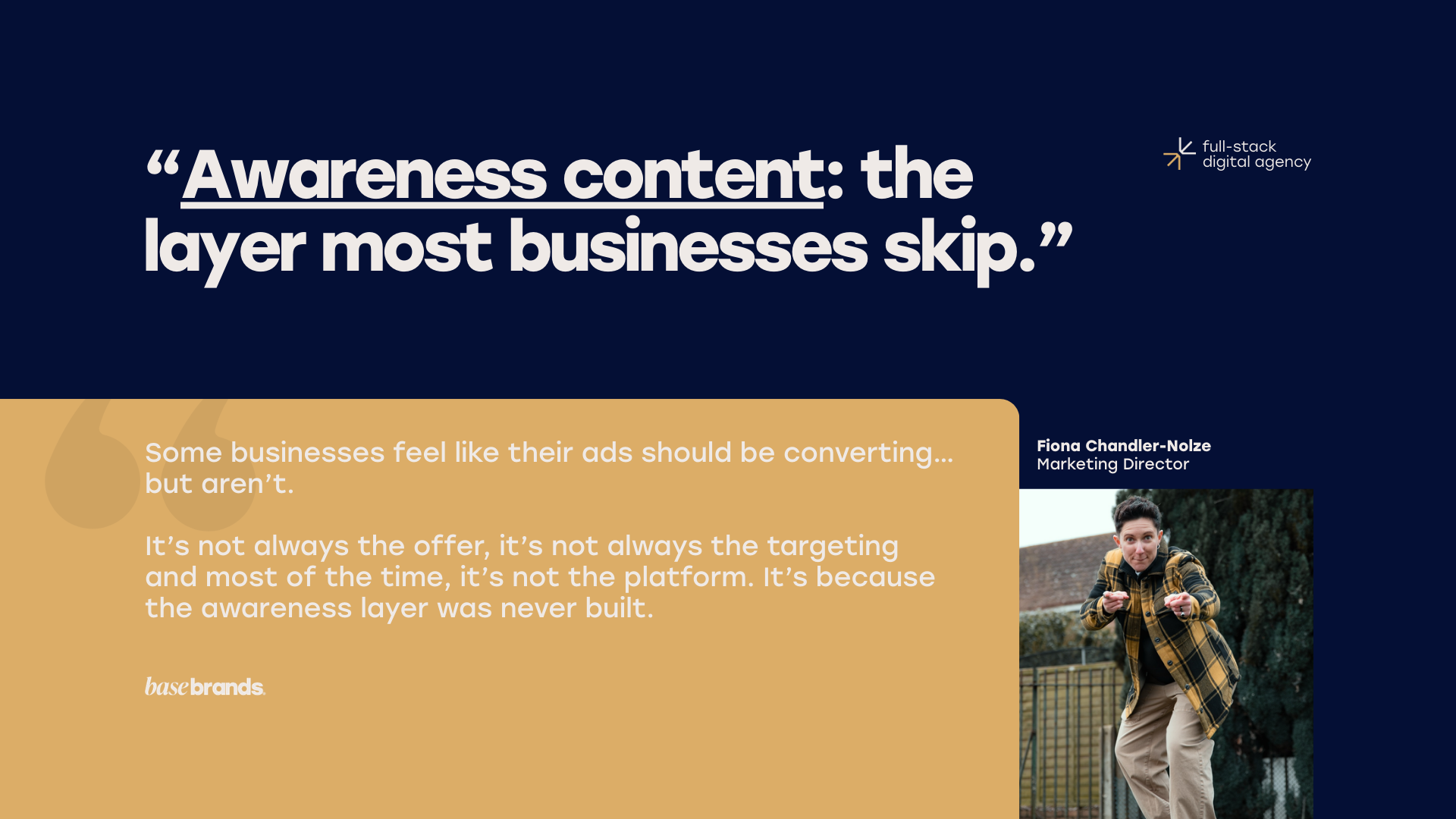
For a lot of business owners, awareness content gets lumped into the same category as “nice posts”, “brand stuff”, or content that looks good but doesn’t really do anything.
The kind of content that’s tolerated rather than planned, and that’s a huge mistake.
Because awareness content isn’t there to sell. It’s there to make the selling easier.
When people misunderstand what awareness content is and what it’s actually for, the cracks don’t show up straight away. They show up later, in higher ad costs, weaker conversion rates, and campaigns that take far longer to gain traction than they should.
So let’s take a step back.
What Is Awareness Content?
At its simplest, awareness content sits at the top of the marketing funnel.
Its job is to educate, engage, and build familiarity. It helps people understand:
- the problem they’re dealing with,
- why that problem exists,
- and why you are someone worth listening to about it.
It’s how people start to make sense of their pain points and how to solve them, long before they’re ready to buy anything, and that’s the key thing to understand.
Awareness content is not about leads. It’s not about sales, and it’s definitely not about pushing an offer.
It’s about earning attention and trust so that when the time is right to sell, the work has already been done.
Awareness Content Isn’t One Thing
This is where most people go wrong.
They treat awareness content as if it serves one purpose, when in reality it serves two very different audiences.
Awareness Content for Cold Audiences
Cold audiences are people who:
- don’t know you yet,
- haven’t built any trust with you,
- and may not even realise they have the problem you solve.
At this stage, awareness content is about helping people connect the dots.
You’re talking about common pain points, you’re explaining why those problems exist and you’re giving people language for something they might already be feeling but haven’t quite articulated.
At the same time, you’re quietly establishing authority. Not by shouting about credentials, but by showing that you understand the problem better than most.
The call to action here should be intentionally light:
- follow the account,
- watch more content,
- learn a bit more,
- stick around.
You’re not asking for commitment. You’re asking for attention.
Awareness Content for Warm Audiences
The second group is your warmer audience.
These are people who already follow you, recognise your name, or have engaged with your content before. They don’t need a full introduction every time you show up.
But they do need consistency.
For warm audiences, awareness content is about reinforcement. Repeating your core beliefs. Showing how you think. Reminding people that when it comes to this problem, you’re someone who knows what they’re talking about.
This is how you stay top of mind without forcing a sale.
It’s the quiet, steady presence that means when someone finally reaches a decision point, you’re already the obvious option.
Why Awareness Content Matters for Performance Marketing
This is where awareness content really earns its place.
When it’s done properly:
- paid traffic warms up faster,
- retargeting works harder,
- sales messaging lands more easily.
When it’s skipped or treated as an afterthought, everything downstream has to work overtime. Ads feel harder, costs creep up and conversion rates suffer.
So if you ever look at your ads or content and think, “this should be converting better…”
It’s often worth stepping back and asking a different question first.
Have we actually earned the attention yet?