-
1182 Views
There’s a line I heard recently on a podcast with Ross McKay, founder of Cadence, that’s been sitting with me ever since:
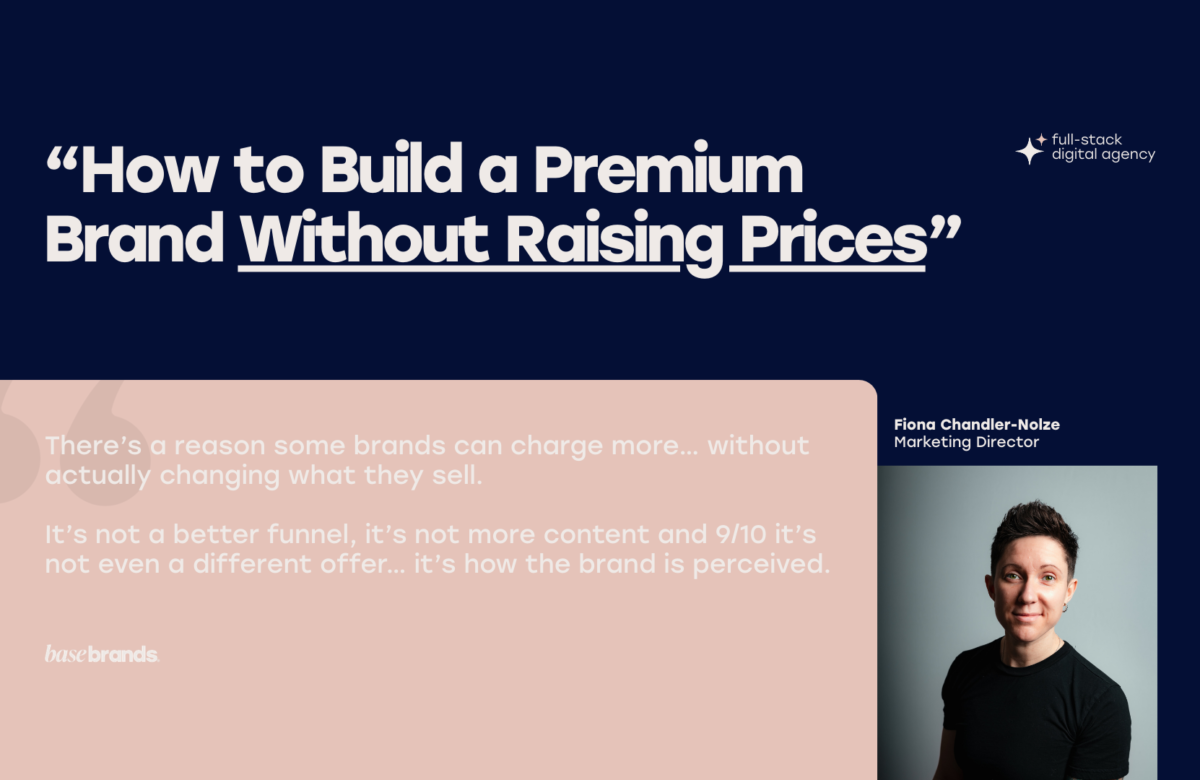
“Premium isn’t defined by price. It’s defined by brand.”
And it immediately made me think about the mix of businesses we work with at Base Brands.
Because across our partners, we’ve got everything from low-ticket, high-volume offers through to very premium, high-touch services. And interestingly, the way we actually generate demand for them often looks very similar on the surface.
Lead generation → Education → Nurture → Conversion
Same underlying structure, but the perceived value in the market? Completely different.
I see it all the time. Two businesses can run almost identical funnels and one comfortably sells at £29 while the other sells at £3,000+. The mechanics aren’t the differentiator. It’s the meaning the buyer attaches to what’s being offered.
That’s where premium really lives. Not in the price, but in the perception.
What Actually Makes a Brand Premium?
If you’re trying to position your business as more premium, it helps to understand where that perception actually comes from, because it isn’t created at the pricing stage. It’s created long before anyone reaches a checkout or books a call.
You see it in how clearly a brand positions who it’s for (and who it’s not), you feel it in the tone, restraint and confidence of the messaging and you notice it in the consistency across content, visuals and experience.
It’s alignment > Repeated signals > Coherence.
This is why simply raising prices rarely creates premium on its own. If the brand, positioning and experience haven’t shifted, the market still reads the same signals. The number just changes.
Premium vs Low Ticket: Different Models, Not Opposites
Something I often explain when we talk about pricing and positioning is that low ticket and premium aren’t opposites. They’re just different models.
Some of our partners intentionally choose accessibility and volume and others choose selectivity and depth.
Both can work brilliantly, both can be positioned well and let me tell you, both can be highly profitable. But the psychology and framing are worlds apart.
Low-ticket positioning tends to emphasise ease, inclusivity and quick wins. Where premium positioning leans into expertise, transformation and identity shift.
Same funnel stages > different psychological promise.
Why Two Identical Funnels Can Sell at £29 or £3,000+
From a marketing architecture perspective, most businesses today use similar growth mechanics:
- paid traffic or organic content
- lead magnets or education
- nurture sequences
- conversion points
So when two businesses use similar funnels but command completely different price tolerance, the difference isn’t the funnel, it’s the brand meaning wrapped around it.
We’re talking about what the offer represents, who it’s perceived to be for, what identity it signals to the buyer and what level of trust and authority is implied.
That’s what changes willingness to pay.
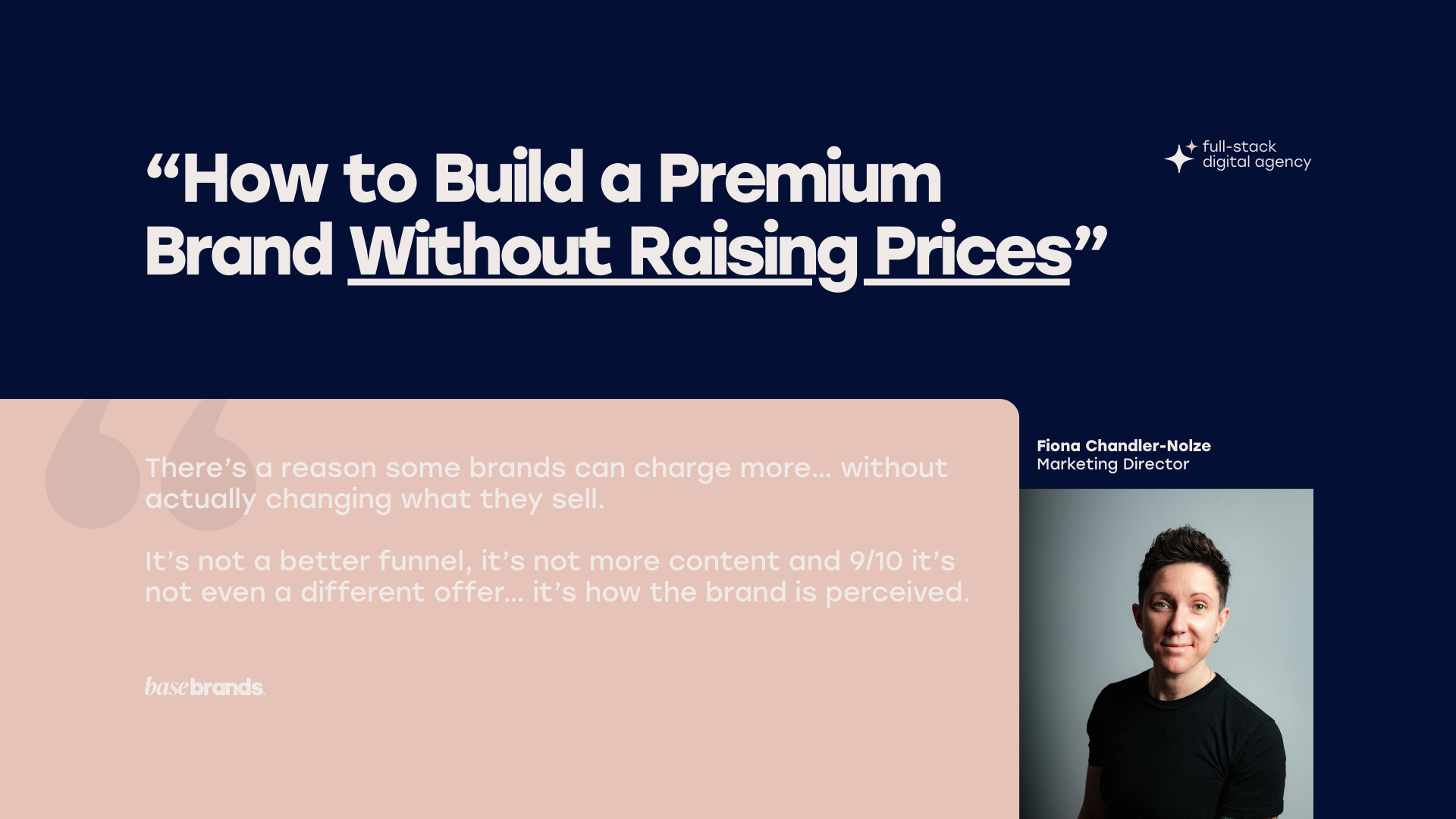
How to Build a Premium Brand (Without Raising Prices)
If you’re thinking about moving your brand to a more premium feel, the shift doesn’t start with price. It starts with perception.
In practice, that usually means working on:
Positioning clarity
Being specific about who you serve and who you don’t.
Messaging confidence
Speaking with authority rather than persuasion or over-explaining.
Brand consistency
Aligning visuals, tone, content and experience across touchpoints.
Perceived expertise
Demonstrating depth, not just outcomes or features.
Audience framing
Attracting buyers who value depth, not just accessibility.
Because premium isn’t what you charge, it’s what people feel before they see the price.
The biggest misconception about premium is that it’s created by charging more.
In reality, price is usually the result, not the cause.
When brand, positioning and perception shift, price tolerance follows naturally, and that’s why two businesses can run the same funnel and live in completely different price realities in the market.